WORLD ANTI-DOPING AGENCY 2026 PROHIBITED LIST
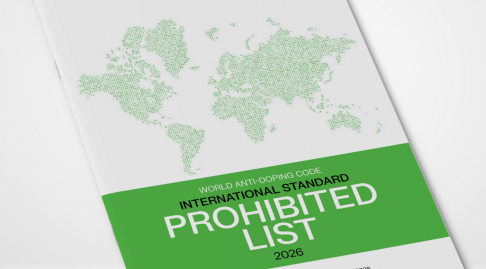
The World Anti-Doping Agency (WADA) has published its 2026 List of Prohibited Substances and Methods.
The 2026 Prohibited List has been released by the World Anti-Doping Agency (WADA) and will come into effect on 1 January 2026. It is available on the WADA website here.
The Prohibited List identifies which substances and methods are prohibited at all times, in-competition only and within specific sports.
All athletes and athlete support personnel should familiarise themselves with the new changes in advance of them coming into effect on 1 January 2026.
The Major Changes
Major modifications for 2026
As outlined in the 2026 Summary of Major Modifications and Explanatory Notes, the major modifications for 2026 include the following:
- Further examples or clarifications have been added to the following substance classes to help athletes and their entourage better identify prohibited substances:
- S1. Anabolic agents,
- S2. Peptide hormones, growth factors, related substances, and mimetics,
- S4. Hormone and metabolic modulators, and
- S6. Stimulants.
- The dosing intervals of salmeterol have been changed to avoid potential ergogenic effects, though the maximum daily delivered dose remains the same.
- More details have been given about the prohibition of withdrawal of blood and blood components.
- The non-diagnostic use of carbon monoxide (CO) has been added to the Prohibited Methods as a new section, M1.4. The use of carbon monoxide for diagnostic purposes, such as total hemoglobin mass measurements or the determination of pulmonary diffusion capacity, is not prohibited.
- Cell components (e.g., nuclei and organelles such as mitochondria and ribosomes) have been added to the existing prohibition of using normal or genetically modified cells.
- It has been clarified in the Glucocorticoids Washout Table that use of sustained-release formulations may result in detectable glucocorticoid levels past the washout period due to prolonged systemic absorption.