GENDER EQUITY RESEARCH LAUNCHED AT 2025 FIE CONGRESS
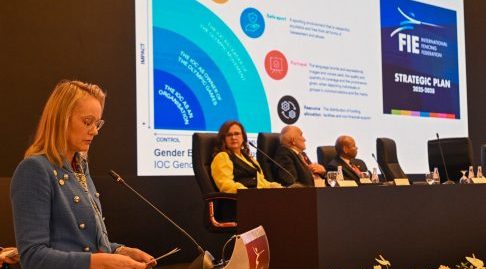
As a member of the FIE Women and Fencing Council, Georgina Usher, BF CEO presented to the 2025 FIE Congress on the FIE Gender Equity research initiative.
Advancing gender equity in fencing is a central aspect of the new FIE strategic plan.
As part of the programme of work the FIE is supporting PhD research at the University of Hertfordshire to examine gender equity in fencing and to better understand the potential barriers and facilitators of women’s experiences.
Comprehensive global data on the number of women involved in fencing remains limited and outdated and the topic of gender equity in the sport of fencing is under-researched.
This research aims to fill that gap by providing a detailed analysis of female participation in, and leadership of, fencing at national and international level. For example, women participants as athletes (in competing roles) and coaches, referees, Leadership/National Federation (NF) Administrators (in non-competing roles).
In addition to the data analysis, the research will also aim to increase understanding of the potential barriers and facilitators of women’s experiences, identify and support sharing of best practice and highlight the value and impact of gender equity in fencing.
As part of the presentation of the FIE Strategic Plan, BF CEO and member of the FIE Women and Fencing Council Georgina Usher summarised the Gender Equity research project and reminded National Federations to engage by completing the survey sent out prior to the Congress.
Georgina Usher said, “This research will provide the vital platform on which the FIE and other National Federations can establish goals and initiatives to promote Gender Equity in fencing. By better understanding the challenges and sharing examples of best practice we can all work together to attract and retain more women in all aspects of the sport across the world.”
Lindsay Bottoms, Professor in Exercise and Health Sciences and BF Medical Committee said, “By building a much clearer picture of women’s involvement in fencing worldwide, this research will help ensure that future gender equity policies are grounded in evidence, not assumptions. It is a privilege to be contributing to work that can strengthen opportunities for women and support the long-term growth of the sport.”